
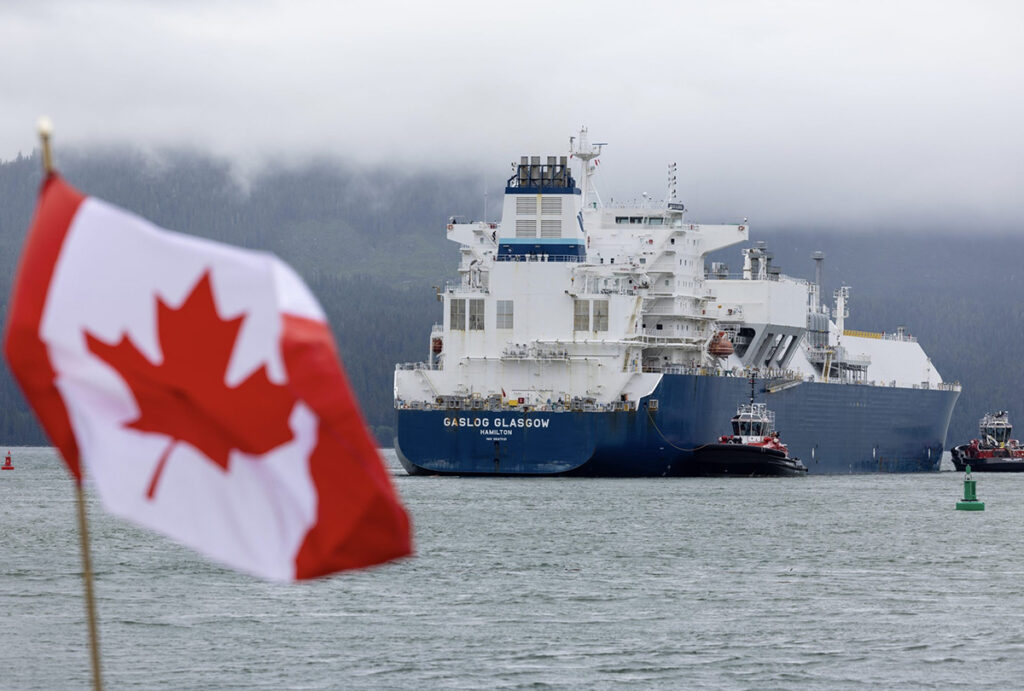
LNG, a horrible, terrible, no good, very bad investment. Even in Canada
The Prime Minister believes (or wishes to lead us to believe) LNG will bring Canada out of its economic stagnation, placing it on the world’s stage as an energy powerhouse. Apparently, the project will fuel the economic resurgence of the Canadian economy and bring jobs and prosperity to Canada.
Aside from the fact that #MethaneMark is a greenwasher, liquefied natural gas (LNG) is not a clean-burning or environmentally friendly source of energy. Transporting it across the ocean, which is what the PM is calling for, makes it 33% worse than coal. I can’t wrap my head around shipping LNG to have other nations use LNG to replace coal; we are sending them LNG which is worse than coal.
Foreign investors own a significant portion of Canada’s LNG industry. Canada owns and controls very little. Subsidies paid for by Canadian taxpayers are in many instances supporting a foreign corporation. It is unacceptable enough to push corporate welfare for Canadian corporations, but it is egregious to subsidize foreign actors.
Both Shell and Mitsubishi have announced that they are exploring the sale of their stake in the Canada LNG Phase 2 fast-track major project. Perhaps Shell and Mitsubishi realize something the government refuses to tell Canadian citizens: LNG is an economic loser.
With the transition to renewables, how long does Mr. Carney believe China, the global leader of transitioning to renewable energy, will buy Canadian LNG? Does he believe China will give up its pursuit of renewable energy to bolster the Canadian economy?
Climate change costs Canada half of its annual GDP growth. The percentage will only increase over time. Between 2005 and 2015, Canada’s annual insured losses were $14 billion. In the following decade, its losses increased to more than double, with $37 billion losses. Climate change has already cut the annual GDP growth by half. This will only become worse.
As countries shift towards renewable energy, driven by necessity rather than choice, the demand for LNG will gradually decline. What happens to the investors in LNG? Once subsidies and questionable profits cease, investors will flee, leaving Canadians with another stranded asset that will incur costs for repaying any debt and for site remediation. The LNG market is already experiencing a glut, which is projected to continue, yet the current government has decided to expand its operations, much of it funded by the Canadian taxpayer.
The process of turning methane into LNG is intensive and expensive. The entire process, from gas extraction to delivery to the end user, involves fracking, processing, transportation over long distances, and regasification for combustion. It is the most expensive form of energy.
Currently, LNG Canada’s Phases 1 and 2, Cedar LNG, Woodfibre, and Ksi Lismis are either proposed for fast-track major project status or are already under construction or in production. The end-product is for exportation, not domestic use, while subsidizing both domestic and foreign investors. All of the LNG projects are in BC, a province that lies on Canada’s largest area of seismic activity and is edging toward a 12-month wildfire season.
Mark Carney is not a stupid man but a banker. Bankers are known for targeting the unsuspecting middle class to increase their profits. Currently, LNG Canada’s Phases 1 and 2, Cedar LNG, Woodfibre, and Ksi Lisims are proposed for fast-track major project status, are under construction or already in production. Could it have something to do with Mr. Carney’s former employer, Brookfield, having a large stake in the LNG industry? Mark Carney and Brookfield share a similar economic future.
Two of the five LNG projects were referred to the Major Projects Office, as well as the electrical transmission line to satisfy the energy needs of three projects deemed to be in Canada’s national interest. Where can national interest be found in a losing enterprise? Indigenous nations have voiced their protest in LNG projects but have received no response. The proposed legislation appears to be drafted primarily to benefit corporations, particularly those in the energy sector. Soon, silence will reign as the RCMP, with its expanded powers, gains unrestricted authority to suppress corporate interests.
The Prime Minister believes (or wishes to lead us to believe) LNG will bring Canada out of its economic stagnation, placing it on the world’s stage as an energy powerhouse. Apparently, the project will fuel the economic resurgence of the Canadian economy and bring jobs and prosperity to Canada.
Aside from the fact that #MethaneMark is a greenwasher, liquefied natural gas (LNG) is not a clean-burning or environmentally friendly source of energy. Transporting it across the ocean, which is what the PM is calling for, makes it 33% worse than coal. I can’t wrap my head around shipping LNG to have other nations use LNG to replace coal; we are sending them LNG which is worse than coal.
Foreign investors own a significant portion of Canada’s LNG industry. Canada owns and controls very little. Subsidies paid for by Canadian taxpayers are in many instances supporting a foreign corporation. It is unacceptable enough to push corporate welfare for Canadian corporations, but it is egregious to subsidize foreign actors.
Both Shell and Mitsubishi have announced that they are exploring the sale of their stake in the Canada LNG Phase 2 fast-track major project. Perhaps Shell and Mitsubishi realize something the government refuses to tell Canadian citizens: LNG is an economic loser.
With the transition to renewables, how long does Mr. Carney believe China, the global leader of transitioning to renewable energy, will buy Canadian LNG? Does he believe China will give up its pursuit of renewable energy to bolster the Canadian economy?
Climate change costs Canada half of its annual GDP growth. The percentage will only increase over time. Between 2005 and 2015, Canada’s annual insured losses were $14 billion. In the following decade, its losses increased to more than double, with $37 billion losses. Climate change has already cut the annual GDP growth by half. This will only become worse.
As countries shift towards renewable energy, driven by necessity rather than choice, the demand for LNG will gradually decline. What happens to the investors in LNG? Once subsidies and questionable profits cease, investors will flee, leaving Canadians with another stranded asset that will incur costs for repaying any debt and for site remediation. The LNG market is already experiencing a glut, which is projected to continue, yet the current government has decided to expand its operations, much of it funded by the Canadian taxpayer.
The process of turning methane into LNG is intensive and expensive. The entire process, from gas extraction to delivery to the end user, involves fracking, processing, transportation over long distances, and regasification for combustion. It is the most expensive form of energy.
Currently, LNG Canada’s Phases 1 and 2, Cedar LNG, Woodfibre, and Ksi Lismis are either proposed for fast-track major project status or are already under construction or in production. The end-product is for exportation, not domestic use, while subsidizing both domestic and foreign investors. All of the LNG projects are in BC, a province that lies on Canada’s largest area of seismic activity and is edging toward a 12-month wildfire season.
Mark Carney is not a stupid man but a banker. Bankers are known for targeting the unsuspecting middle class to increase their profits. Currently, LNG Canada’s Phases 1 and 2, Cedar LNG, Woodfibre, and Ksi Lisims are proposed for fast-track major project status, are under construction or already in production. Could it have something to do with Mr. Carney’s former employer, Brookfield, having a large stake in the LNG industry? Mark Carney and Brookfield share a similar economic future.
Two of the five LNG projects were referred to the Major Projects Office, as well as the electrical transmission line to satisfy the energy needs of three projects deemed to be in Canada’s national interest. Where can national interest be found in a losing enterprise? Indigenous nations have voiced their protest in LNG projects but have received no response. The proposed legislation appears to be drafted primarily to benefit corporations, particularly those in the energy sector. Soon, silence will reign as the RCMP, with its expanded powers, gains unrestricted authority to suppress corporate interests.