Once Upon a Time: A Neoliberal Fairy Tale
Chapter 1: The Masterminds
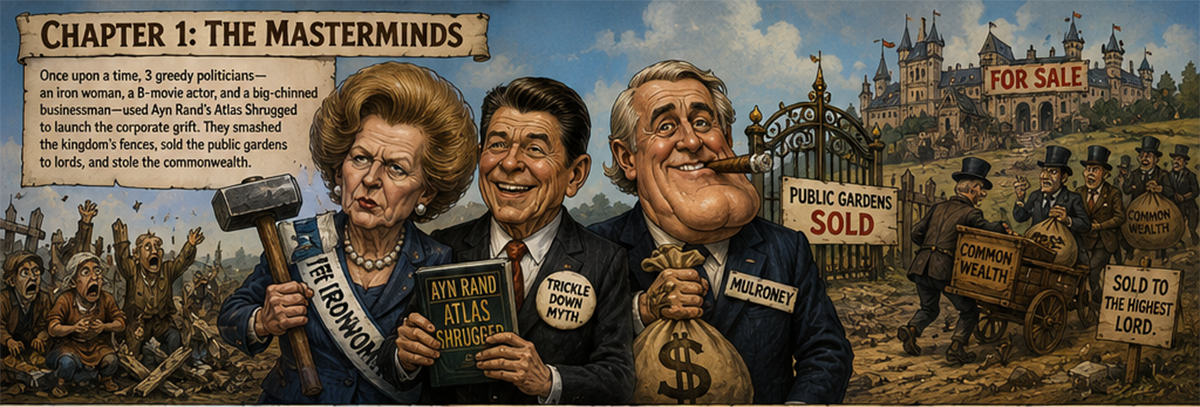
Once upon a time, 3 greedy politicians—an iron woman, a B-movie actor, and a big-chinned businessman—used Ayn Rand’s Atlas Shrugged to launch the corporate grift. They smashed the kingdom’s fences, sold the public gardens to lords, and stole the commonwealth.
Chapter 2: The Ropers
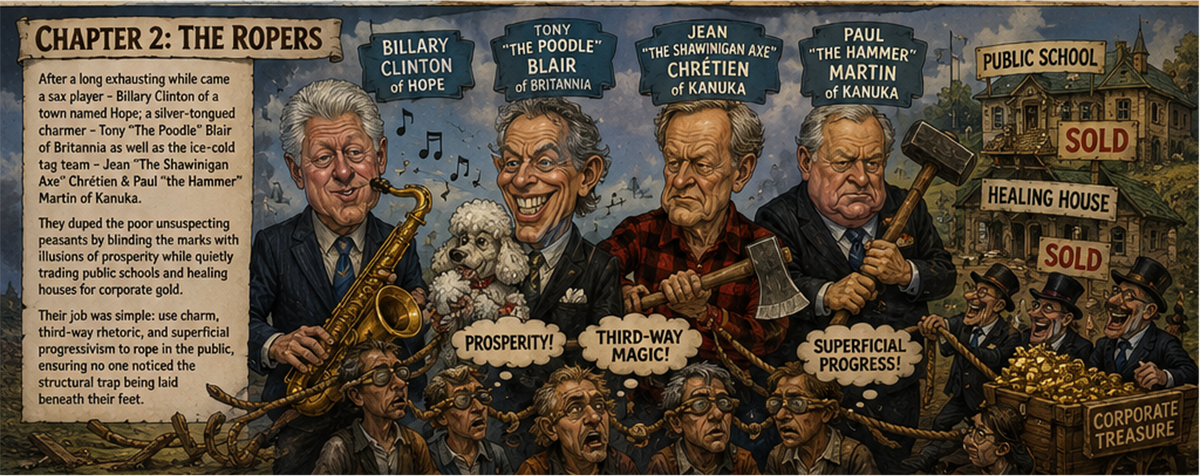
After a long exhausting while came a sax player – Billary Clinton of a town named Hope; a silver-tongued charmer – Tony “The Poodle” Blair of Britannia as well as the ice-cold tag team – Jean “The Shawinigan Axe” Chrétien & Paul “the Hammer” Martin of Kanuka.
They duped the poor unsuspecting peasants by blinding the marks with illusions of prosperity while quietly trading public schools and healing houses for corporate gold.
Their job was simple: use charm, third-way rhetoric, and superficial progressivism to rope in the public , ensuring no one noticed the structural trap being laid beneath their feet.
Chapter 3: The Inside Men
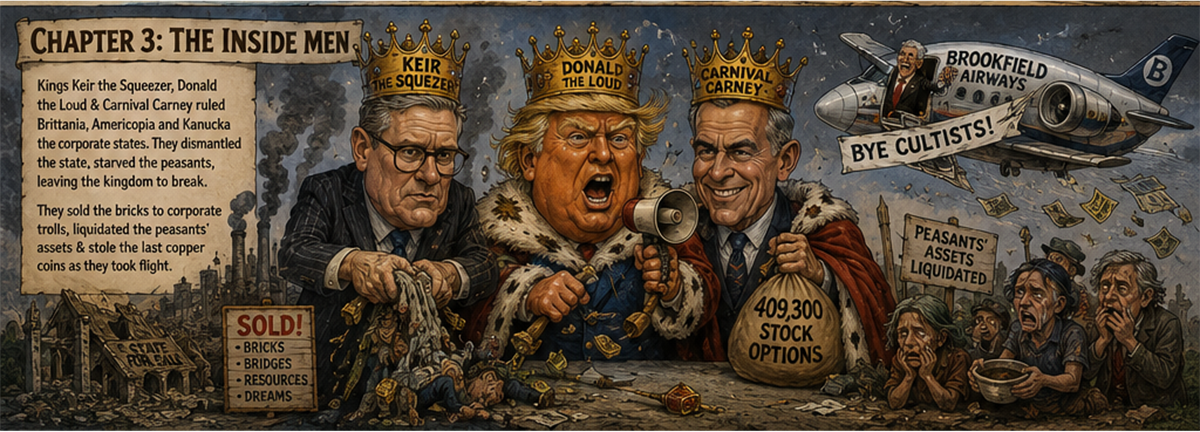
Kings Keir the Squeezer, Donald the Loud & Carnival Carney ruled Brittania, Americopia and Kanucka, the corporate states. They dismantled the state, starved the peasants, leaving the kingdom to break.
They sold the bricks to corporate trolls, liquidated the peasants’ assets & stole the last copper coins as they took flight
And so, the final rulers arrived, promising prosperity while feeding the kingdom to the furnaces. They opened the gates to the fossil-fuel barons, declared the climate crisis someone else’s problem, and called every new pipeline, mine, and drilling field “progress.”
Meanwhile, the price of bread climbed beyond the reach of ordinary villagers. Houses became castles for investors and landlords, while families crowded into ever-smaller corners of the kingdom. The public coffers were emptied, the commons were carved up, and every problem was handed to the market—with a bill attached.
But the greatest theft was not the gold, the gardens, the schools, or the healing houses.
Chapter 4: The Bill Comes Due
It was the future.
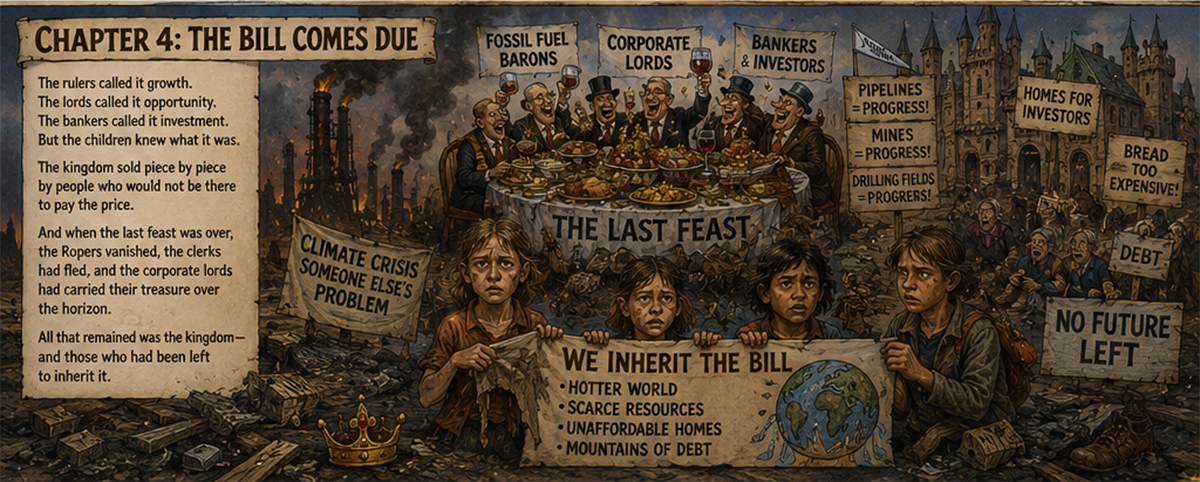
Beyond the smoke and the towers of corporate wealth stood the children and grandchildren—the generation that had never been invited to the feast but would inherit the bill. They would inherit a hotter, more unstable kingdom, scarcer resources, unaffordable homes, mountains of debt, and a climate pushed closer to the edge.
The rulers called it growth.
The lords called it opportunity.
The bankers called it investment.
But the children knew what it was.
The kingdom sold piece by piece by people who would not be there to pay the price.
And when the last feast was over, the Ropers vanished, the clerks had fled, and the corporate lords had carried their treasure over the horizon.
All that remained was the kingdom—and those who had been left to inherit it.
Chapter 4: The Bill Comes Due
And such, the final rulers arrived, promising prosperity while feeding the kingdom to the furnaces. They opened the gates to the fossil-fuel barons, declared the climate crisis someone else’s problem, and called every new pipeline, mine, and drilling field “progress.”
Meanwhile, the price of bread climbed beyond the reach of ordinary villagers. Houses became castles for investors and landlords, while families crowded into ever-smaller corners of the kingdom. The public coffers were emptied, the commons were carved up, and every problem was handed to the market—with a bill attached.
But the greatest theft was not the gold, the gardens, the schools, or the healing houses.
It was the future.
Beyond the smoke and the towers of corporate wealth stood the children and grandchildren—the generation that had never been invited to the feast but would inherit the bill. They would inherit a hotter, more unstable kingdom, scarcer resources, unaffordable homes, mountains of debt, and a climate pushed closer to the edge.
The rulers called it growth.
The lords called it opportunity.
The bankers called it investment.
But the children knew what it was.
The kingdom sold piece by piece by people who would not be there to pay the price.
And when the last feast was over, the Ropers vanished, the clerks had fled, and the corporate lords had carried their treasure over the horizon.
All that remained was the kingdom—and those who had been left to inherit it.